
Glühwein Tastes Good Anywhere, Including Scotland – This year, I’m sending you my Christmas and New Year’s greeting in the form of a short story. Let yourself be taken into a story about saying goodbye and new beginnings. About the art of turning the stones that are placed in our path into something beautiful. A story that, by the way, is relevant at any time of the year.
Glühwein Tastes Good anywhere, Including Scotland – by Bettina Bonkas
“Another milk coffee?”
Her hostess held out the espresso pot invitingly. Martha was actually completely content, but she just didn’t want to leave Alva and her cozy kitchen yet. Where had she got all these beautiful things from? The little wooden cabinet with the decorations and colorful buttons? The large mirror with the curved metal frame, in which this powerful postcard was stuck, one that she always had to look at:
“What if I fall? – Oh, my darling, what if you fly?”
Holding the large cup in her hands, she let herself be refilled with coffee and milk, and absentmindedly gazed out the window at the snow-dusted rooftops. Smoke was rising from the chimneys, crystals hung on the trees. Christmas lights everywhere, giving the grey day a wonderful glow. What an atmosphere!
Just yesterday, she had been standing on the motorway, stressed, with a stiff back and a headache. She had already regretted, once again, that she had booked this short trip so close to Christmas on a whim. But now she was just glad to be here. It was kind of crazy, but as soon as she had entered Alva’s house, all the tension had fallen away. Alva radiated a soothing calmness and, at the same time, was so full of life.
“Come on, let me show you your room first. When you’re ready, feel free to come up to the kitchen, and I’ll make us some tea.” The welcoming cup of tea was something Martha knew only from England.
She had gladly accepted Alva’s invitation. The best and most relaxing part was that she could simply sit there. Alva seemed to instinctively know that Martha didn’t feel like talking. She just wanted to enjoy this soothing calm that emanated from this woman and her apartment.
On the second evening, Alva handed her pens and paper. “Maybe you’d like to write down what’s on your mind. It’ll help you get it out of your head.”
Martha hesitated at first, then began writing.
About the humiliation, the betrayal of trust, the disappointment, and the anger – her entire emotional turmoil – when she found out that Björn had cheated on her. The time when the deep, almost unbearable pain set in and the awakening awareness of how she had changed over time. She actually wanted to forgive Björn, but in the end, she became more and more suspicious and bitter. She adopted behaviours she never wanted and became more like her mother. She was on the best path to becoming a dissatisfied, mistrustful, and grumbling woman who focused entirely on her job. At least she was doing well there. Very well, in fact. Still, she didn’t want to be such a sourpuss. She was far too young for that. Besides, it showed later in her facial features. No, no, no, she wanted to have a kind, lively face with laugh lines when she was older. But then, how could Björn do this to her?!
Conversations by the Fireplace
“You can’t run away from your inner wounds, Martha.”
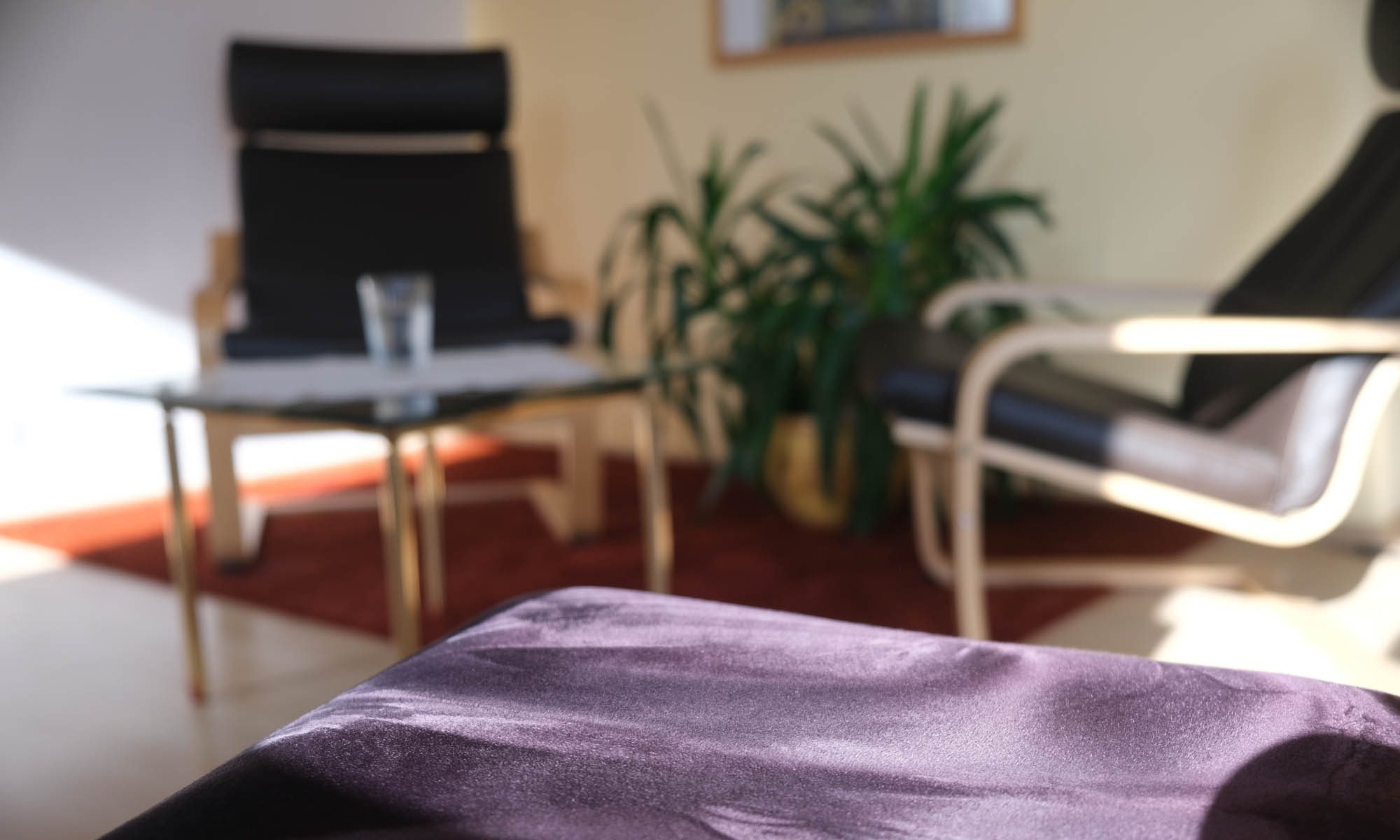
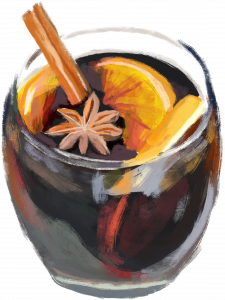
They had once again made themselves comfortable in Alva’s living room in front of the fireplace. Both sat in their armchairs, feet propped up on footstools, warmly wrapped in cable-knit blankets. Where had Alva got those from? The room was lit by candles and string lights. Martha stared, almost fixated, at the Christmas pyramid, which spun gracefully, warming her hands on her cup. The evening mulled wine by the fire, which Alva made from an old family recipe, became a beloved tradition.
“I don’t want to judge whether you should forgive Björn or not. That’s not my place. But when I listen to you, Martha, I hear something deeper. A deeper pain.”
“How did you become the way you are, Alva?”
Alva laughed. “By eventually not being able to stand myself anymore. I had distanced myself more and more from who I was. I was just going through the motions, trying to please everyone, stressed out, and as a result, increasingly irritable and dissatisfied. I know all about forgiveness. Very well, in fact. For my then-husband’s sake, I gave up having children. He didn’t want any. Then he left me for a younger woman and started a family with her. By then, it was too late for me.”
“How awful is that? What an asshole!” Martha was completely outraged.
“Such an agreement always involves two people, Martha. Giving up children was my own decision, even though I made it for Olaf’s sake. I could have chosen not to have children with him.”
“But…”
“Martha, I made that decision myself. He didn’t force me. It’s easy to fall into the victim role and blame Olaf for everything. Usually, there are two sides to things. It took me a while to realize that. But yes, Olaf hurt me a lot. It really hurt back then.”
“How did you get over it?” Martha was curious.
My Journey to Myself
“It was a longer process during which I got to know myself better. And in the end, that’s what it’s all about, getting to know yourself better, knowing what triggers you. I confronted my fears and insecurities, and I asked myself some really uncomfortable questions. For example: What hurt me most about Olaf’s betrayal? And why? Or: Why am I so embarrassed in front of our friends that Olaf left me? Why do I care so much about what they think of me? And I travelled, I took care of other people’s children, and through that, I learned a lot about the country and its people and also expanded my horizons. I joined theatre groups, acted, and wrote plays. When you travel and act, you learn a lot about yourself. And I also fell in love again. It’s still very new.” Alva smiled.
“Then the breakup with Olaf had a good side for you,” Martha mused, turning her cup of mulled wine in her hands.
“Let’s say it made me realize that I was on the verge of losing myself. That had been happening before. Olaf probably spared both of us from a long, unhappy marriage where the spouses would eventually just annoy each other.”
“There must be something you can pass on to me, Alva. I feel so calm inside when I’m with you. But I know that will change as soon as I’m back home.”
“What is it that makes you feel calm inside here, Martha?”
“There’s no pressure with you, nothing. You don’t have any expectations of me, like the others do. You don’t expect me to make a decision. You accept me as I am. It’s incredibly soothing.” Martha leaned back and closed her eyes.
“And what about your expectations of yourself?”
“Be strong. Make decisions. Know exactly what I want.”
“And what does it really look like inside you?”
“Totally uncertain. I honestly don’t know what I want right now. Should I forgive Björn or not? But somehow, it doesn’t feel so important right now.”
“And what feels important to you right now, Martha?”
“Why I always want to please everyone. Why is the approval of others so damn important to me?”
“If you find an answer to that, Martha, you can decide from within whether you really want to give Björn and yourself a chance, or if you’ll fall into your usual pattern and fulfill others’ expectations.”
Martha instinctively knew that Alva had touched on a sore spot, one that she needed to look at if she wanted to break the pattern and make free decisions. She would follow Alva’s advice and write down her thoughts. What was moving her and, most importantly, clear her mind. She was taking so much from these conversations.
“My dear, always remember that a happy person will never treat you badly. It was a liberating realization for me when I realized that a person who is content with themselves and their life will treat you with respect, even if they don’t always agree with you. For them, there’s no reason to hurt you. Disrespectful behaviour, on the other hand, comes from people who are unhappy with themselves and their lives and are looking for someone to vent their frustrations on to elevate themselves. Always, always remember: It’s their problem, not yours! And don’t make it yours.”
Alva paused before she went on.
“Life will keep throwing stones in your way, Martha. And you’ll stumble over them again and again. But it’s up to you whether you use them for something meaningful or whether you let them become stumbling blocks. ‘You can build something beautiful from stones that are placed in your path.’ By the way, this quote is often attributed to Goethe, but according to experts, that’s not quite right (dpa fact-check). But it’s still a good one.”
Martha instinctively felt that she would seek out more people who did her good. Just like Alva, though Alva was something truly special. This wouldn’t be her last visit to her. She would continue to visit this special woman to recharge and learn more about herself.
Life is change
It wasn’t surprising, but it was still a shock when Alva one day told her that she would be moving: to Scotland with her boyfriend Daniel. He had fulfilled his big dream and turned his hobby into a profession. He was now playing as a musician in a band, and she would accompany him on his world tours.
Phew, Alva would be missed. Her visits to her cozy apartment, but especially her conversations and her presence. But Martha was now ready. She was innerly strengthened and had already built a small but very fine circle of people who enriched her life. After all, Scotland wasn’t that far away, and there was still Zoom. And actually, it was pretty cool: Now she had a friend in Scotland whom she could visit when she wasn’t traveling herself.
And so, Martha started making plans. This Christmas, she would spend time with Alva & Daniel in a small hotel on a Scottish island: Jenny Colgan – Christmas at the Little Island Hotel – And mulled wine tastes good in Scotland too. (*I’m still reading, but what I’ve read so far, I really like:-)
Isn’t life always about saying goodbye? At the same time, new things come along. Let’s be open, invite the new into our lives, and let it enrich us. – What if I fall? – Oh, my darling, what if you fly?”
Want a continuation? Here’s the link to the next part of my “Martha & Alva” series: All we need is love
Merry Christmas & a healthy and fulfilling New Year!

Did you enjoy my post? I’d be thrilled if you shared it: classic via email, on social media – anything is welcome. If you subscribe to my newsletter, you’ll receive my posts automatically. 🙂
Are you interested in personal development,
- but feel a bit overwhelmed and wish for additional or deeper support?
- or realize that you’re stuck and not making progress on your own?
Some topics are complex and need a more in-depth look. I’d be happy to support you with coaching.
Interested in a free introductory call? I look forward to hearing from you.

 the magic of a good story
 The magic of a good story